
The quality of chicks is very important. If the chicks can achieve the characteristics of liveliness, uniform size, good umbilical cord closure, no omphalitis, high maternal antibodies and neatness, and no dehydration (legs are smooth and not dry), these characteristics indicate that the chicks are of high quality and can be satisfied by customers. Coupled with other conditions that can meet the needs of the chicks, the survival rate within a week will definitely be high.
1.Factors affecting the quality of chicks
1.1 Breeder quality
High-quality breeder chickens should have good genetic performance, and all production indicators (body condition, uniformity, egg production rate) of the breeder flock meet the breed requirements. At the same time, there is no vertical transmission disease infection, no chronic diarrhea symptoms. The reproductive system of a healthy hen is sterile, so there are no pathogenic microorganisms in the formed egg yolk and protein. Also, the antibody level is high and uniform, and the nutritional status is good.
Breeder chickens can transmit diseases vertically. If the breeder is infected with a certain pathogenic microorganism and invades the reproductive system, the pathogenic microorganism will enter the yolk and protein to reach the embryo and pass it on to the next generation, that is, vertical transmission. There are usually 7 kinds of infectious diseases that can be spread vertically through breeding eggs. Namely Salmonellosis, Mycoplasma, Leukemia, Encephalomyelitis, Reovirus, Infectious Anemia and Egg Drop Syndrome. However, sometimes when infectious diseases such as Newcastle disease, infectious bronchitis, fowl pox, etc. occur in breeders, the corresponding virus may also be carried in the eggs, which may be passed on to the next generation.
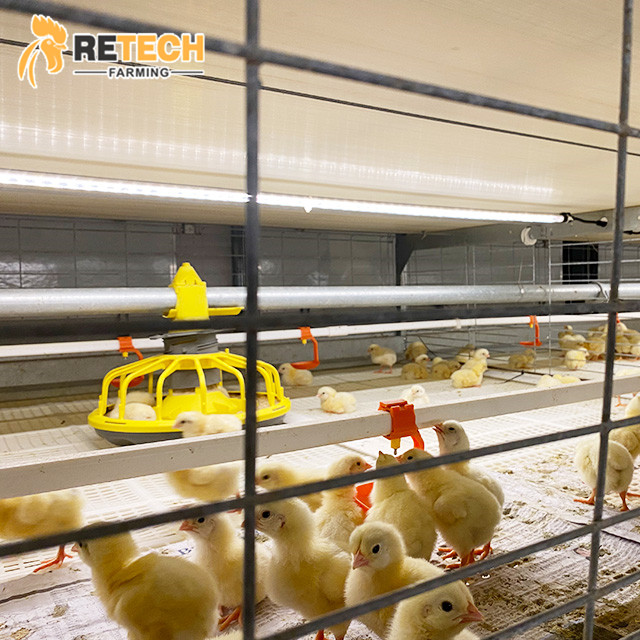
chicks poultry system
1.2 Egg quality
At the same time, the better the quality of the eggshell, the higher the hatching rate, and the better the quality of the chicks. Some thin-shelled eggs or sand-skinned eggs lose more water in the incubator, causing the chicks to become dehydrated, lighter, and sluggish.
1.3 Cooling eggs
After the eggs were laid, they were placed at different temperatures of 21.1°C, 23.9°C, 26.7°C, and 29.4°C for 4 days, and the embryo diameters reached 4.87 mm, 6.80 mm, 13.88 mm, and 22.52 mm, respectively. It can be seen that as the storage temperature increases, the embryo develops faster and faster. If the temperature of the breeding eggs cannot be lowered to below physiological zero in time, there will be no guarantee that the embryos will suspend development. This will not only reduce the hatching rate but also seriously affect the quality of the chicks.
1.4 Storage of breeding eggs
During the storage of the breeding eggs, carbon dioxide is lost from the egg contents, resulting in a decrease in the quality of the egg white and a reduction in hatchability. Experiments have proved that after 4 days of storage of breeding eggs, the hatching rate will decrease by 0.5% and the hatching time will be extended by 1 hour for every additional day of storage, and there will be more abnormal embryos and dead embryos, which will reduce the quality of chicks, increase the rate of early death, and even affect future production performance.

egg incubator
1.5 Embryo Overheating During Incubation
Generally, embryo overheating is more likely to occur in the later stages of incubation. At 17-18 days of embryonic development, the eggshell temperature should ideally reach 37.8℃ (optimal), while 38.3℃ is still acceptable. If the eggshell temperature exceeds 38.9℃, it is harmful to the embryo, not only reducing the hatching rate but also severely affecting the quality of the chicks.
Harmful Effects of Embryo Overheating
For example, chicks may experience decreased weight, deterioration in mental state, umbilical cord bleeding, and symptoms of inflammation, fever, and swollen skin. Furthermore, excessively high incubation temperatures can lead to exposed embryonic brain, malformations of internal organs and legs, anophthalmia or other eye abnormalities, malposition of the embryo, short, stiff, or coarse down feathers, and congestion or unhealed umbilical cord.
1.6 Water loss rate of breeding eggs
Too much or too little water loss in the breeding eggs will affect the quality of the chicks. When the breeding egg loses less water, the air chamber of the breeding egg is small, the chicks are difficult to peck the shell, the umbilical cord is malabsorbed, and the umbilical cord becomes inflamed.
On the other hand, if the breeding eggs lose too much water, the embryos will become dehydrated, and the chicks will be prone to lighter weight, dehydration and dry claws, and lack of energy.
2. Solutions
2.1 Choose a reputable brand of hatching eggs
Import hatching eggs from traditional farms free from direct sources of disease transmission. Large-scale breeding companies have more stringent production processes, ensuring the health of their flocks. Select hatching eggs with a shell thickness between 0.33 and 0.35 mm.
2.2 Use advanced incubation equipment.
Ensure optimal temperature, humidity, and ventilation during incubation to meet the needs of embryonic development. Implement thorough hygiene and disinfection to prevent pathogen contamination and improve chick quality.
It is best to adjust the temperature of the incubator so that the eggshell temperature of the hatching eggs reaches 37.8°C to prevent the hatching eggs from over-heating in the incubator.