In the broiler poultry farming industry, “rapid slaughter” is not merely about achieving rapid growth; rather, it involves ensuring the health and survival rate while minimizing the breeding period, enhancing the uniformity of slaughter, and reducing the feed-to-meat ratio, thereby achieving higher economic benefits. For modern large-scale broiler chicken farms, the core of rapid slaughter is not a single specific step but rather a comprehensive management throughout the entire breeding process.
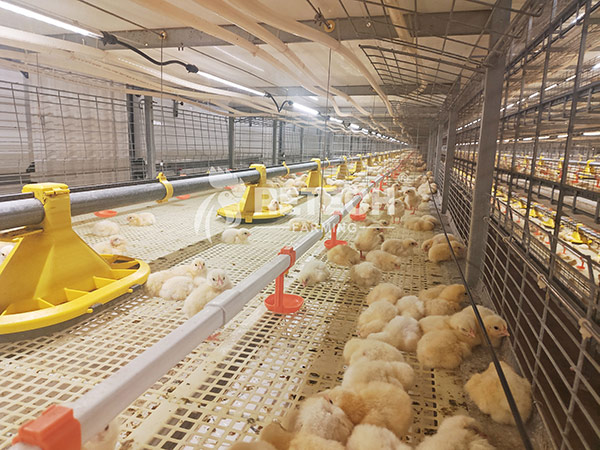
So, how to achieve rapid slaughter of meat chickens? Below, we will analyze in detail from multiple key aspects to provide practical methods for improving the slaughter rate and breeding efficiency.
I. Select high-quality chicks
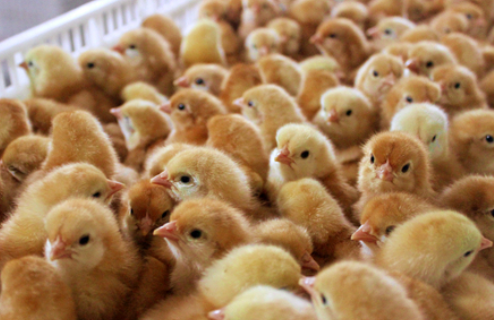
For fast-meat chicken production, the first step is to select the right chicks. The quality of the chicks directly affects the survival rate, growth rate and uniformity in the later stages.
1. Select healthy and strong chicks
High-quality chicks should have the following characteristics:
- Good mental state
- Clean and fluffy feathers
- Uniform weight
- Good healing of the umbilical cord
- Strong activity ability
If the quality of the chicks is poor, even with proper management in the later stages, it is difficult to achieve efficient and rapid production.
2. Select the right breed: The genetic foundation for rapid slaughter.
The preferred option would be a formal hatchery and a meat chicken breed that suits the local breeding conditions. Different breeds vary in growth rate, feed-to-meat ratio, and stress resistance.
- White-feathered, fast-growing meat chickens (such as Kebao, Ross 308, etc.): They can reach 2.5-3.0 kg in 42-45 days, with a feed-to-meat ratio as low as 1.6-1.8:1. They are currently the mainstream choice for achieving rapid slaughter.
- Yellow-feathered meat chickens (medium-slow type): These take 60-90 days or even longer to grow and are suitable for the differentiated market that focuses on meat quality and flavor.
Suggestion: For large-scale and highly efficient breeding farms, it is recommended to choose fast-growing white-feathered meat chickens. If targeting mid-to-high-end channels, a portion of high-quality yellow-feathered chickens can be combined.
II. Precision Nutrition:
Feed costs account for 60% to 70% of the total cost of livestock farming, and the nutritional strategy directly affects the rate of slaughter.
1. Stage-based precise feeding
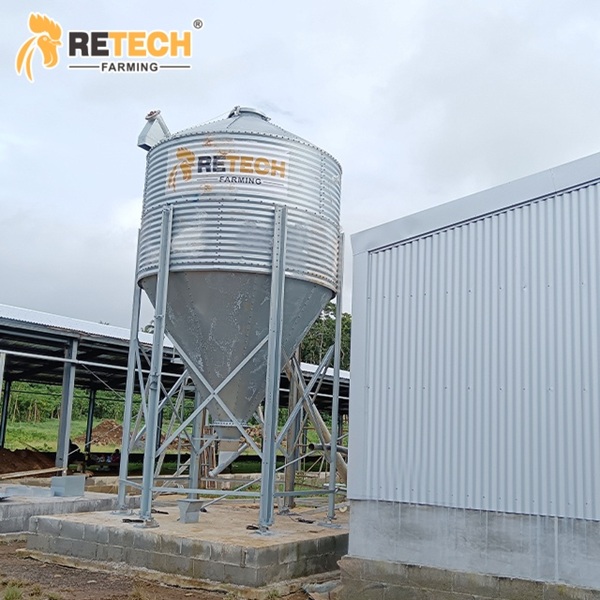
- Early stage (1-14 days): High protein (21%-23%), easy to digest, use crushed or granular feed, promote the chicks’ feeding and intestinal development.
- Mid-stage (15-35 days): Energy gradually increases (12.5-13.5 megajoules per kilogram), protein drops to around 20%, bones and muscles grow simultaneously.
- Late stage (from 36 days to slaughter): Increase energy and reduce protein.
2. Add functional ingredients
Vitamins and trace elements: Adequate amounts of vitamins A, D3, E, and organic trace elements (zinc, selenium) can enhance the ability to resist stress and promote weight gain.
III. Environmental Control:
The rate of broiler growth is largely determined by whether the environment within the chicken house is “appropriate.”
1. Precise matching of temperature and humidity
The temperature during the brooding period should be 33-35℃, and it should decrease by 2-3℃ every 3-4 days.
The humidity is 60%-65% in the early stage and 50%-55% in the later stage. Excessive humidity is likely to breed coccidia and mold; too low humidity can cause the respiratory mucosa to become dry.
Core principle: Based on the behavior of the chickens – they should be evenly spread out and actively foraging for food to be considered appropriate.
2. Ventilation and Air Exchange:
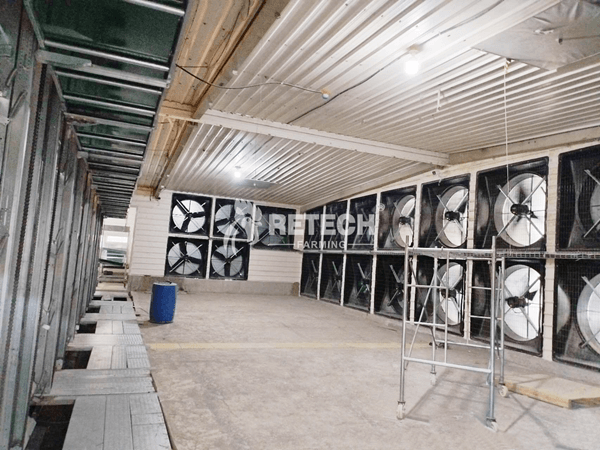
The ammonia concentration must be kept below 20 ppm. High levels of ammonia can damage the respiratory tract mucosa, leading to a decrease in feed intake, an increase in feed-to-meat ratio, and in severe cases, causing air sac inflammation, which can slow down the livestock’s growth rate.
Using longitudinal ventilation combined with variable-frequency fans to ensure uniform air flow inside the barn; in winter, use the minimum ventilation volume with side wall air intake, and in summer, activate the wet curtain for cooling.
3. Lighting System
Recommended intermittent lighting: 2 hours of light and 1-2 hours of darkness, or turn off the lights for 4-6 hours at night. This method not only ensures sufficient feeding time but also reduces unnecessary energy consumption for activities. Studies have shown that intermittent lighting can reduce the feed-to-meat ratio by 0.05-0.1 compared to continuous lighting.
4. Reasonably control the density
If the stocking density is too high, it will lead to competition for food, restricted movement and increased stress, which is not conducive to rapid slaughter.
The stocking density should be reasonably arranged according to the facilities of the chicken house, ventilation capacity and the characteristics of the breed.
V. Implementing Disease Prevention and Control
1. Strengthening Biosecurity
The chicken farm should strictly control the entry of outsiders, vehicles and supplies, and carry out disinfection and isolation work.
2. Follow Immunization Procedure
Based on the local disease situation and the advice of veterinarians, formulate a reasonable immunization schedule.
3. Timely Identifying Abnormal Chickens
During daily rounds, pay special attention to observing changes in feeding, drinking, mental state and feces.
If diseased or weak chickens are found, they should be dealt with promptly to reduce losses to the flock.
4. Reducing Stress
Changes in feed, catching chickens, cutting feed, weather changes, disinfection stimulation, etc., all may cause stress and affect feeding and weight gain.
Try to minimize unnecessary operations and make preparations for key steps in advance.
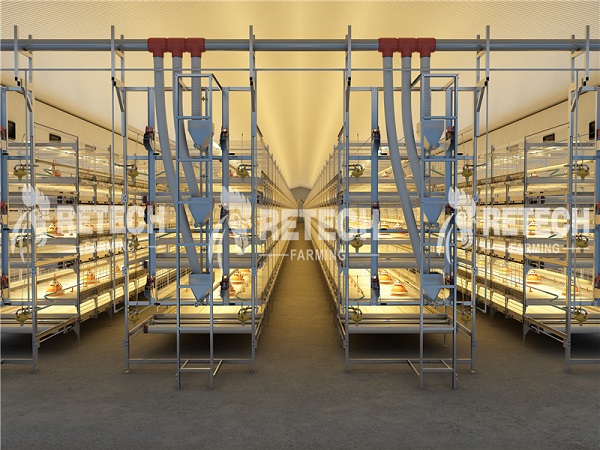
The rapid slaughter of broilers is an important goal for large-scale livestock farms to enhance turnover rate and profits. To increase the slaughter rate, not only the growth speed of broilers needs to be paid attention to, but also systematic optimization should be carried out in aspects such as chick selection, brooding management, feed nutrition, environmental control, disease prevention and slaughter management.
Select the appropriate broiler breeding equipment and chicken farm support systems. Please contact Retech Farming – a poultry farming solutions provider from China. The factory covers an area of 7 hectares, with 5 production workshops. It offers high-quality production, quick delivery, and also provides overseas project installation services. This will enable your project to start on time.