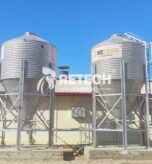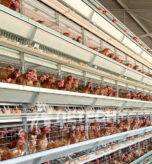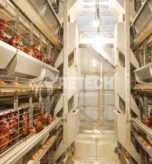
The quality and management of the production facilities and equipment of a layer chicken farm are important indicators to evaluate the modernization and standardization of a layer chicken farm. Modern layer chicken production has a high level of mechanization and automation. It can provide guarantees for improving the environment of the layer chicken house, improving the production efficiency and improving the production conditions.
1.Layer chicken farm design and construction
The chicken house is the space for the daily life of the chickens. The design and construction of the chicken house are directly related to the environmental conditions in the chicken house. It has a direct impact on the health and production of the chicken flock. Moreover, the construction cost of the layer chicken house is the main part of the fixed investment of the layer chicken farm, which affects the cost of layer chickens. Chicken houses can be used for a long time once completed. If the design or construction is not reasonable, its adverse effects will last for a long time.
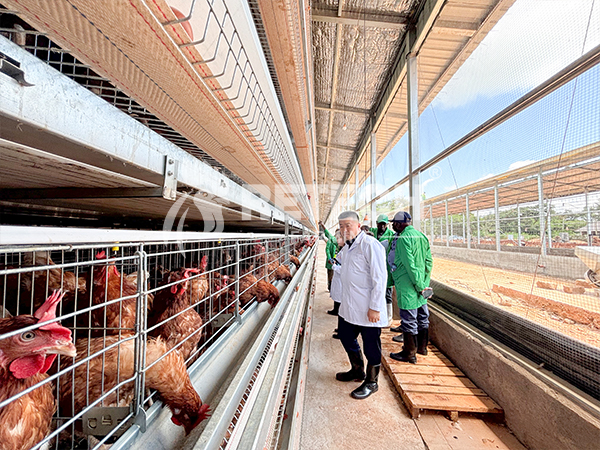
1-1. Type of layer chicken house
According to the lifestyle of layer chickens, it can be divided into 3 types of chicken houses. I have written about it in previous articles. Click to view the link.
Automatic battery chicken cage system:
Automatic Chicken Floor System:
Free range:
1-2. Basic principles of layer chicken house design and construction
Whether the design and construction of the chicken house is reasonable is related to the safety and service life of the chicken house. Moreover, it has an important impact on the health and production potential of the flock, the environment in the chicken house, and the investment in chicken farm projects.
When designing and constructing a chicken house, the following principles must be followed:
① To meet the requirements of building functions, chicken farm buildings have some unique properties and functions. It is required that these buildings not only have the functions of general houses, but also have the characteristics of adapting to the production of chickens.
② Meet the health and epidemic prevention requirements. Due to the high stocking density in the house, it is necessary to have sanitary and epidemic prevention facilities and a complete epidemic prevention system. Due to the large amount of waste generated, the site must have a complete fecal and urine treatment system for easy cleaning and disinfection.
③ Maintain a good environment in the house. The important role of the chicken house is to alleviate the impact of adverse weather conditions outside. Therefore, the chicken house is required to have good thermal insulation effect. It can reduce the adverse effects of harsh climates such as severe cold, heat, wind, rain and thunder on the chickens in the house. Maintain suitable temperature, humidity, light, airflow, etc. in the chicken house. Keep the environment in the chicken house relatively quiet to ensure the health and production conditions of the chickens.
④ Play a good isolation effect. It is necessary to effectively prevent birds, mice, cats, dogs and other animals from entering the chicken house, and to prevent strangers from leaving the chicken house.
⑤ Meet the feeding requirements of chickens. There is a complete material supply and storage system and water supply system, which meet the requirements of convenient operation and maintenance, high work efficiency and high quality.
Contact the project manager now to get a poultry farming solution.
2. Meet the production process requirements of layer chickens
Large-scale layer chicken farms usually carry out high-efficiency, high-density and high-quality production according to the flow-type production process. The architectural design of the chicken house should meet the requirements of the layer chicken production process. It is convenient for production operation and improving labor productivity, which is conducive to intensive operation and management, meets the conditions required for mechanization and automation, and leaves room for development.
First of all, it is required to ensure the safety of humans and chickens in terms of hygiene and epidemic prevention, and avoid external interference and pollution. At the same time, it does not pollute and affect the surrounding environment.
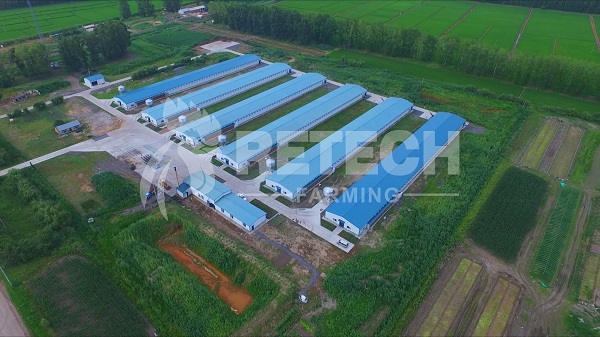
Secondly, the division and layout of each functional area in the site are required to be reasonable, and the positions of various buildings are appropriate to facilitate the organization of production.
It is also required that the overall design of the layer chicken farm be matched with the individual design of the chicken house. The design and construction of the chicken house is in line with the sanitary requirements of the flock and the requirements of equipment installation. Finally, it is required to organize the commercial production of layer chickens according to the production process of “all in and all out”.
3.Conducive to the implementation and application of various technical measures
Correct selection and use of building materials. According to the characteristics of the building space, determine the reasonable building form, structure and construction plan, so that the chicken house building is strong and durable, and the construction is convenient. At the same time, the construction of the chicken house should be conducive to the implementation of environmental regulation technology in order to ensure good health and high yield of poultry.
4.Pay attention to environmental protection and save investment
To avoid the pollution of the poultry farm waste to the environment. It is also necessary to avoid contamination of the poultry farm from the external environment. It is also necessary to prevent poultry farms from polluting the external environment.
① Pay attention to the cleaning method. The pollutants produced in the chicken house are mainly manure, which needs to be cleaned out of the chicken house in time to avoid pollution to the environment inside the house. The automatic manure removal system is currently the most ideal manure removal method. Use this method as much as possible when designing the chicken house.
② Drainage of the chicken house. In summer, the chickens drink more water, and the water in the manure will seep out. A leaky drinking system can also cause thin stools. There is also a lot of waste water after the house is flushed. If the standing water is not drained as soon as possible, it will cause the house to become wet, which is not conducive to maintaining good environmental conditions.
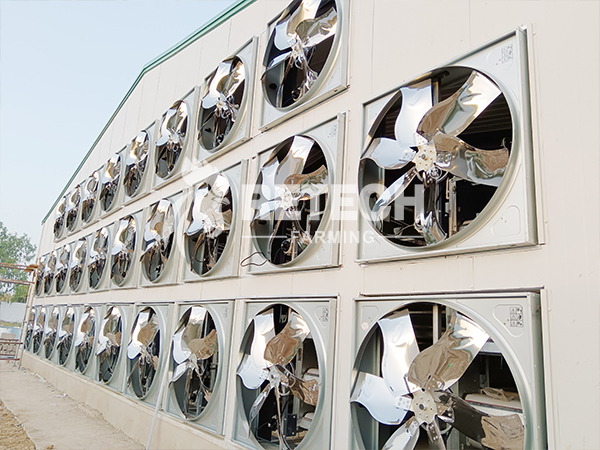
③ Make full use of natural conditions. In order to build an ecological chicken house, attention should be paid to making full use of natural light, solar energy, etc., to reduce production costs and reduce pollution.
4-1. The outer protective structure of the chicken house
① Roof
The roof is the top layer of the house that weighs and covers.
It has three main functions:
Defense against the effects of natural wind, rain, snow, solar radiation and low temperature in winter. Bear dead weight and wind, sand, rain, snow and other loads and live loads of construction or roof maintenance personnel. The roof is an important part of the building and plays an important role in the aesthetics of the building’s image. Roofs must be designed to be strong, durable, waterproof, drain, keep warm (insulation), and resist erosion.
② Wall
The wall requires good thermal insulation performance, waterproof and fireproof, smooth surface, easy to clean, sturdy and durable, easy to construct, low cost, etc. The presence, number, or thickness of walls depends on the local climatic conditions and type of house. In warm climates, the wall thickness can be thinner. In colder climates, thicker walls or add other insulation to the walls.
Commonly used wall materials include: solid clay turn, composite wall, cement mixed version.
③ Doors and windows
Doors
The location of the door should be based on the principle of convenient work, transportation and cold protection. Generally located at the south or one end of the chicken house. The width of the door should be such that all the equipment and working vehicles in the room can enter and exit smoothly. The door body should be sturdy and easy to open and close, and a spring sliding door can be installed, preferably automatically kept in the closed position. If you want to increase lighting and avoid possible collisions when entering and leaving, you can install glass on the upper half of the door. In order to facilitate the vehicles to leave, no thresholds are required. Disinfection pools should be installed at the main doors of people and vehicles, which is an important checkpoint to prevent pathogens from being brought into the chicken house.
Windows
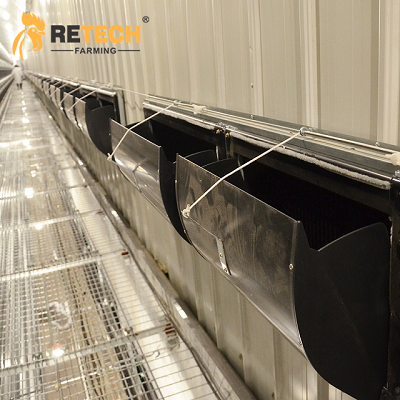
Windows are associated with ventilation, lighting and temperature control in the house. The basic requirements for windows are high light transmittance, tight gaps, and flexible switching. When arranging the plane position and height of the window, care should be taken to make the interior of the house evenly lighted and ventilated smoothly, so that the chicken body can be blown by the wind. The size of the window area depends on the structure of the chicken house. Generally, the area of the south window is larger than that of the north window, and the area of the north window is about 2/3 of that of the south window. This can reduce the invasion of the chicken house by the north wind in winter.
The ratio of the light transmission area of the window to the ground area is generally 1:(10~15). The ratio in cold regions is even lower, about 1:25. The windows should be the right size. If the area of the window is too large, the heat loss of the glass window is 3 times that of the brick wall of the same area. It is difficult to keep warm in winter. Although summer is good for ventilation, there is more solar radiant heat entering from the windows. If the light is too strong, it is easy to make the chickens restless, fighting and pecking incessantly.
Generally, the low windows close to the ground have a good effect on removing the dirty air deposited on the ground, but they have little effect on lighting, so shutters are often used. Tall windows are very effective at removing foul air from the top of the house and are very helpful for lighting the house. Therefore, when the high windows have both lighting and ventilation functions, glass shutters can be used. The inner surface of the window should be level with the wall, and the window surface should be protected with barbed wire to prevent the intrusion of wild animals. The closed chicken house has no windows, only emergency windows and ventilation holes. Usually there is no lighting or ventilation, but in case of a power failure, you need to be able to open the emergency exit. Therefore, it can be used as a panel window or a switchable shutter, and the latter can also be used to adjust the air intake at ordinary times, which is flexible in use.
④ Ground
The floor of the chicken house must be firm. The ground is flat, and generally the ground and retaining walls should be coated with cement. When the caged chicken house adopts the manure scraping method, it is necessary to dig a manure groove (generally 1.8 meters in width) under the chicken cage.
Rinse and disinfect.
In areas with a high water table or relatively humid areas, a moisture barrier (linoleum or plastic film) should be laid under the ground. The ground inside the house is required to be 30 to 40 cm higher than the outside of the house, which is not only conducive to drainage, but also helps to prevent moisture.
4-2. Disinfection facility
Disinfection is an important part of sanitation and epidemic prevention in layer chicken farms, and an important means to prevent infectious diseases in chickens. Disinfection facilities are the key to implementing some disinfection measures.
① Disinfection pool
Chicken farm gate disinfection tank: The gate disinfection tank is used to disinfect foreign vehicles. It is generally in the shape of a porch, about 5 meters in length, 5 meters in height and 4 meters in width. Automatic spraying equipment is installed on the top and side walls of the disinfection porch. When the vehicle passes through the disinfection gallery, the automatic disinfection control device will automatically turn on and spray the disinfectant on the surface of the vehicle.
There is a disinfection pool on the ground in the disinfection porch, with a depth of about 12 cm. Usually, the disinfectant should be replenished in time for the disinfection of vehicle tires.
Disinfection pool at the entrance of the chicken house: A foot disinfection tank should be set up at the entrance of the chicken house, with a length of 1 meter, a width of 0.5 meters, and a depth of 5 cm. There are sacks in the pool, and disinfectants are usually added. When the breeder enters the house, he steps on the sack to sterilize the soles of the shoes.
Vehicle disinfection pool at the gate of the production area:
This vehicle disinfection pool is a channel for transporting vehicles such as chicks, eggs, equipment, and feed. The construction requirements are the same as those of the chicken farm gate disinfection pool.
② Disinfection room
The disinfection room is generally built at the connection between the production area of the chicken farm and the office and living area, and is the only passage for personnel to enter and leave the production area.
When the personnel wearing work clothes and rubber shoes pass the disinfection time, the disinfectant is sprayed on the surface of the work clothes through the atomizing nozzle. A disinfection pool with a depth of about 10 cm is set on the ground of the disinfection room, and personnel need to wear rubber shoes to pass.
There is also a special ultraviolet irradiation disinfection room outside the disinfection facility, and the items brought in by the personnel need to be disinfected.
3. How to choose Automatic layer chicken cages equipment?
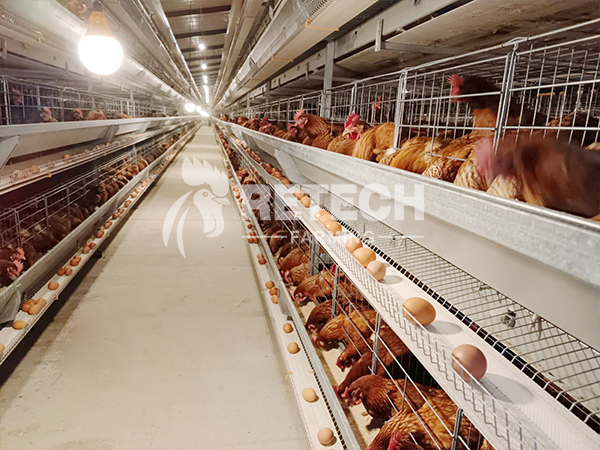
RETECH Farming is a leading poultry farming equipment manufacturer in China. Our high-quality hot-dip galvanized layer hen battery cages are strong, durable, and have a lifespan of up to 15 years. They are currently exported to over 80 countries and regions worldwide, making us a trustworthy partner for poultry equipment.
4. Auxiliary facilities
Auxiliary production facilities are also an indispensable part of a layer chicken farm, which can be set up according to the actual situation of your layer chicken farm.
The egg storehouse is used to store fresh eggs or hatching eggs, and the temperature in the egg storehouse is required to be controlled artificially. The temperature control range is 13-23°C, and the relative humidity is around 75%. It is required that the temperature in the egg storehouse is relatively stable after setting to prevent fluctuations. The storage time of fresh eggs shall not exceed 5 days, and the storage time of hatching eggs shall not exceed 7 days.
Some chicken farms will purchase concentrated feed or premixed feed mixed with corn and other raw materials. This feeding method requires the establishment of a raw material warehouse and a finished product warehouse.
If you are planning a 50,000 layers hen farming project, please contact me for solutions and quotes on automated layer cage equipment.
Email:director@farmingport.com
WhatsApp:8617685886881